
 Recommended by
Le Routard & Le Petit Futé
Recommended by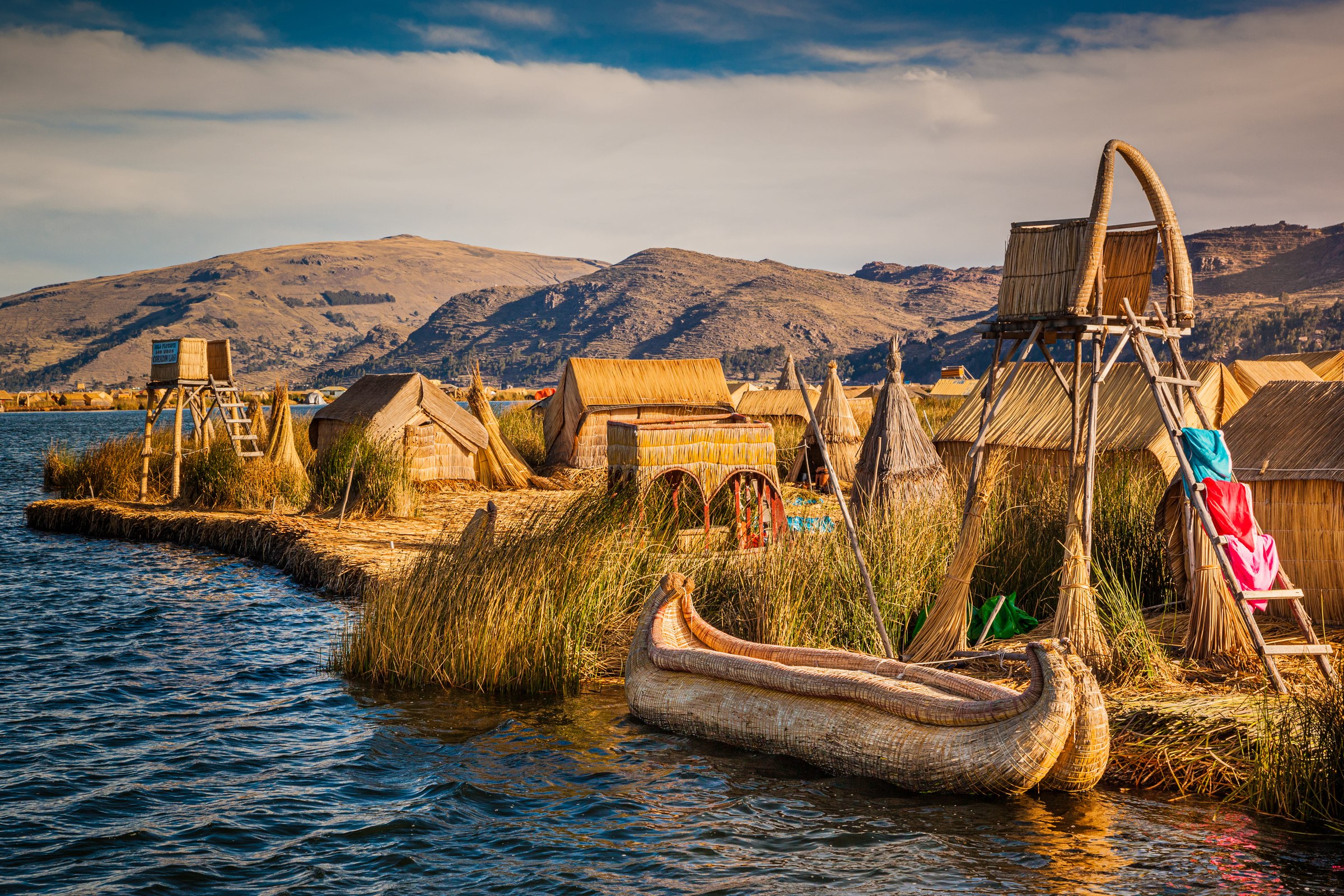
Do you have questions about how our trips are organized, or about Peru and Bolivia? A lot of information can be found on our site, but here is a list of the most frequently asked questions. Feel free to contact our specialists if you don't find the answer to your questions here.
Is a tailor-made trip accompanied by an English-speaking guide?
Not necessarily. These trips are tailor-made, so it is the client who decides which services to include. However, for a trip for 2 people, the cost of a guide accompanying you at all times is relatively high, and most clients prefer to have guides only for the visits. In general, our tailor-made trip clients opt for a permanent accompanying guide starting from groups of 8 people.
Does a tailor-made trip include meals?
As with the previous question, generally not. For organizational reasons, it is preferable to include meals only when a guide is accompanying you. Including meals, or some meals, can simplify the trip for groups of a certain size (say, from 10 people upwards). On the other hand, for smaller groups on a tailor-made trip, we recommend keeping the pleasure and flexibility of deciding on the spot for this particular point. Breakfasts are always included at the hotel.
What is the best time of year to travel to Peru and Bolivia?
Two main factors should be taken into account to answer this question: tourist crowds and climate. To give a quick answer, most people opt for the dry season from April to November. But depending on each person's preferences and the type of trip planned, the choice can be different. For a more detailed answer to this question, we refer you to the page on our site: when to travel to Peru?
How can I know your company really exists?
Before entrusting thousands of dollars to a company in such a far-away country, we recommend verifying its legal existence. In Peru, companies are registered with the Superintendencia Nacional Tributaria (SUNAT) under a Registro Unico de Contribuyente (RUC) number. On the SUNAT website (https://e-consultaruc.sunat.gob.pe/), you can run a search for a company by its RUC. You will see various pieces of information, such as "Estado del Contribuyente" which must show "Activo", "Condición del Contribuyente" which must show "Habido", or the number of employees "Cantidad de trabajadores". Our RUC is 20558033313.
Additionally, travel agencies must also be registered with the Ministry of Tourism (Mincetur). You can also find us on their website by clicking the following link or copying it into your browser: http://consultasenlinea.mincetur.gob.pe/directoriodeserviciosturisticos/DirPrestadores/DirBusquedaPrincipal/AgenciaViajes
Please note that these links may change over time. Thank you for letting us know if any of these links are no longer valid.
OK, I've verified your legal existence, but how can I know the quality of your services
Since 2006, hundreds of clients have agreed to leave a testimonial about their trip on our site, providing their email address. You can write to them, and most are kind enough to reply. In addition, some former clients have agreed to become our "representatives" and to answer your questions by phone. You will find their contact details on the contact page of our site.
Do you include international flights?
No. We do not include international flights to get to Peru or Bolivia. However, we do include Peruvian and Bolivian domestic flights and, where applicable, an international flight between these two countries.
Are Peru and Bolivia safe countries?
Yes. Peru and Bolivia have much lower crime rates than most Latin American countries. Also, by traveling with us, you significantly reduce the risks, since all your transportation is taken care of and the hotels are always located in the city center, so you don't need to take taxis. In almost 20 years of activity and close to 20,000 travelers, we have only recorded a few minor incidents (a bag stolen in a restaurant or at a hotel reception), but no assault.
What are the most common medical issues?
Altitude sickness is the most specific ailment associated with a trip to Peru and Bolivia. We recommend that people suffering from cardiovascular or respiratory problems consult their doctor before undertaking this trip. Once there, avoid overexertion at altitude, and if symptoms worsen (headache, fatigue, nausea), let us know so we can call a doctor for you. All hotels located in high-altitude cities and all tourist vehicles carry oxygen in case of discomfort.
Apart from that, the classic case of traveler's diarrhea may affect some people, but we have never had a case where it interrupted a trip.
Are vaccinations required to travel to Peru and Bolivia?
No vaccination is mandatory in Peru or Bolivia, but the yellow fever vaccine is recommended for people traveling to the Amazon.
Can I easily exchange euros, dollars, or other currencies on the spot?
US dollars can be exchanged very easily almost everywhere in Peru and Bolivia at currency exchange offices (avoid banks, which are slower and more expensive). The euro is also easy to exchange, although at a slightly lower rate, in cities with significant tourism. Other currencies, including the Swiss franc and the Canadian dollar, are difficult to exchange and at unfavorable rates. Avoid bringing them.
Are tips included? Should I give them, to whom, and how much?
By definition, a tip is a voluntary gift and therefore cannot be included in a service. It is customary to give one to guides, drivers and restaurant waiters. But unlike the custom in some countries, where there is an almost fixed scale (the painful 15% service charge in Quebec!), there is no rule here, and that's for the best. Our position on this delicate topic is that you should never feel morally obligated to tip for services you have already paid for. A tip should remain a voluntary gesture of appreciation, given for excellent service. We forbid our guides and drivers from putting any pressure on you or making tactless suggestions about tipping. If you feel that anyone has behaved inappropriately on this subject, we thank you in advance for letting us know.
What are the requirements to enter Peru and Bolivia?
You must have a passport valid for at least 6 months at the time of entry into the country. No visa is required, at least for citizens of Canada, France, Belgium and Switzerland. If you hold another nationality, please check the required formalities with the relevant authorities.
What is the cost of meals on the ground?
It varies enormously. You can eat cheaply in Peru: a few euros for a set menu in popular restaurants. But to enjoy the local cuisine in a good restaurant, expect to pay from 10 euros for a dish. An à la carte meal with aperitif-starter-main-dessert and a bottle of wine for 2 in a prestigious restaurant like Chicha in Arequipa will cost around 50 euros per person. In Bolivia, restaurants are on average 20 to 30% cheaper than in Peru.
What is the baggage weight limit?
Airlines in Peru allow 1 checked bag of a maximum of 23 kilos plus 1 carry-on bag of a maximum of 8 kilos, except LC Perú which allows 20 kg checked. In Bolivia, it is 1 checked bag of a maximum of 23 kilos plus a carry-on bag of a maximum of 7 kilos, except EcoJet which allows 20 kg checked. Bus companies in both countries also have rules limiting baggage to around twenty kilos (varies by company).
Should I bring a backpack or a suitcase?
There is no problem bringing a suitcase, but always plan for a small bag for excursion days. In some cases, you may be away for 2 or 3 days before returning to the same hotel. This can be the case for the excursion to Colca Canyon, Lake Titicaca, the Sacred Valley or Machu Picchu. In this case, leave your luggage at the hotel and only bring what you need for the excursion.
Which airlines do you use for domestic flights?
Flights are booked on the scheduled airlines operating in Peru and Bolivia (Latam, Sky Airline, BoA, EcoJet...) respecting the time constraints indicated in the itinerary and allowing safe margins in case of an international connection. If you have specific requirements regarding the airline to use and/or a flight schedule, you can let us know before finalizing your trip booking. We will then let you know if this results in an additional cost.
What is the electrical voltage in Peru and Bolivia?
The voltage is 220 volts in Peru and Bolivia. Some electrical outlets have flat prongs, others round prongs, and some are compatible with both systems. It can therefore be useful to bring an adapter
Why are some entrance fees paid on the ground on tailor-made trips?
On tailor-made trips*, some entrance fees are not included in the price and are paid directly on the ground. Here are the main reasons why we do not include them, and the advantages this gives you. - With the exception of the entrance fee to Machu Picchu (which we do include **), all entrance fees can be purchased directly on the ground, at the entrance of the site visited. There is no need (and often no possibility) to book and buy them in advance. - Under these conditions, to buy your entrance tickets, we would most often have to hand cash to guides or drivers in different cities, who would then have to send the tickets for internal control and accounting justification of expenses. This is a logistical effort that would generate significant costs, which would in fine have to be passed on to the price of your trip. - Similarly, recording thousands of tickets in the accounting system would also involve costs that would unnecessarily increase the price of your trip. - On most of the services that make up a trip, we have negotiated prices lower than what you would get booking directly, which allows us to make all or part of our margin without affecting your budget. This is not the case for entrance fees, for which we pay the same price as you. On these items, our margin would then mean an extra cost for you, which we prefer to avoid. - When, for whatever reason, you interrupt your trip or skip a visit, not having paid for the entrance fee within the trip package lets you save that cost. - Some travelers like to keep the tickets from the sites they visited as souvenirs, which is not possible if we buy the entrance tickets, since we then need the tickets for our accounting.
In summary, with Paprika Tours, you pay your entrance fees with no middleman, at cost price. For the sake of transparency, and so that you can compare the total cost of our trips with those of other providers that include all entrance fees, we indicate for each visit or excursion the value of any entrance fees not included. The time we save by not handling entrance fees, we can devote to building your trip and to booking transportation, hotels, restaurants and guides — services where our local knowledge brings you real added value.
** The entrance fee to Machu Picchu is always included and purchased in advance, as there is a daily limit on the number of visitors. Similarly, some entrance fees may be included directly in a local provider's services. You will always find detailed information for each service in your itinerary.
With a private, tailor-made itinerary designed just for you, our team on the ground supports you from your first message until your return home.